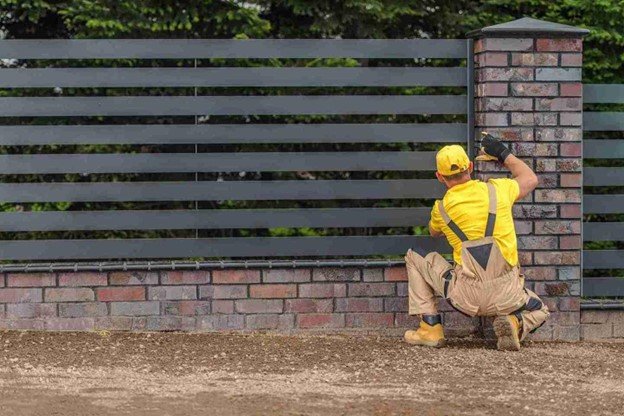
Homeowners planning a new fence should work with an experienced Plano fence contractor who understands both HOA and city requirements. Failure to do so can lead to fines, removal orders, or other penalties.
General Steps for HOA Approval:
- Check HOA Documents: Review the HOA’s Covenants, Conditions, and Restrictions (CC&Rs) or bylaws for rules on fence height, materials, colors, styles, and placement. Many HOAs also require material samples and drawings, which professional fence installation in Plano companies can help prepare correctly. Some HOAs, like those in Willow Bend and Kings Ridge in Plano, require Architectural Review Committee (ARC) approval. Submitting accurate plans upfront helps avoid delays, especially for custom styles like cedar fence installation in Plano.
- Submit Plans to HOA: Submit a detailed plan including height, color, material, and description. Incomplete submissions can cause delays, and HOAs may take 1-6 weeks for approval.
City of Plano Permit Requirements
In addition to HOA approval, the City of Plano has its own regulations:
- Permits: Generally, permits are not required for standard residential fences under 8 feet.
- Specific Requirements: Corner lots have special setback rules. Fences near alleyways might need city approval.
- Documentation: A site plan showing fence location is likely needed. For masonry fences or those with masonry columns, drawings of footing construction are necessary. Improper footing design can lead to violations or future repairs, often requiring fence repairs in Plano if inspections fail.
- Inspections: A footing inspection (if applicable) and a final fence inspection are required.
- Local regulations vary by lot type, which is why working with Plano fence experts familiar with city codes is recommended.
Many Plano fence companies are familiar with local HOA and city regulations and can assist homeowners.
Fence Material Comparison: Cedar vs. Pressure-Treated Pine in Plano, TX
This comparison focuses on cost, durability, and maintenance for cedar and pressure-treated pine fences in Plano, TX.
Cost
Cedar Fences:
- Higher upfront cost.
- North Texas material cost: $8-$12 per linear foot.
- North Texas installed cost (6-foot fence): $26-$32 per linear foot.
- National average material cost: $8.50-$16.50 per linear foot.
- National average installed cost (200-linear-foot fence): $3,700-$9,300 (average $6,500).
- “#2 grade Western Red Cedar” (Value Cedar) is a more budget-friendly option.
Pressure-Treated Pine Fences:
- More affordable initial cost.
- Texas material cost: $4-$7 per linear foot.
- North Texas installed cost: $24-$29 per linear foot.
- National estimates (basic low-grade): $20-$45 per linear foot installed.
- Estimated cost (150-foot fence): $1,500-$3,000 (including labor and materials).
Homeowners comparing materials should also review our full breakdown of cedar vs pressure treated pine fences in Plano.
Durability
Cedar Fences:
- Naturally durable, resistant to rot, decay, and insects due to inherent oils.
- Less prone to warping, splitting, and shrinking, maintaining form in Plano’s climate (heat, humidity, cold snaps).
- Western Red Cedar is particularly robust.
- Lifespan in Texas: 15-25 years with proper installation and sealing. High-quality Western Red Cedar can last 25+ years, potentially up to 30 with consistent maintenance.
- Post Durability: Cedar posts embedded directly in soil can rot quickly. Steel posts encased in cedar trim are recommended for 30-50 year lifespan, preventing ground rot and maintaining alignment.
To prevent ground rot and alignment issues, many homeowners opt for fence post replacement in Plano using steel or treated posts below grade.
Pressure-Treated Pine Fences:
- Pine is chemically treated to resist moisture, termites, and fungal decay.
- Durable for fence posts in soil.
- Lifespan in Texas: 10-15 years, potentially up to 20+ years with proper maintenance.
- Without treatment, pine lasts 5-10 years.
- More susceptible to warping, rotting, splitting, and shrinking than cedar if not maintained.
Maintenance
Cedar Fences:
- Generally requires less intensive maintenance.
- Stain or seal every 3-5 years to preserve beauty, prevent graying, and protect against UV/moisture.
- Pre-stained options offer enhanced durability.
- Regular cleaning (e.g., pressure washing) combats mildew and stains.
Regular upkeep is critical in North Texas, especially as outlined in our guide on cedar fence maintenance in Plano’s climate.
Pressure-Treated Pine Fences:
- Requires more frequent maintenance.
- Reseal every 1-2 years for protection.
- Annual checks and cleaning recommended; replace rotting parts.
- One source suggests up to 30 years without refinishing if properly maintained, while others indicate more frequent sealing is needed.
- Re-staining and repainting are recommended every 8 years.
Conclusion for Plano, TX
Cedar:
- Considered the premier choice for its natural resilience, dimensional stability, and insect resistance in Plano’s harsh climate.
- Higher upfront cost, but potentially lower long-term repair/replacement costs.
- Opting for Western Red Cedar and steel posts enhances durability.
For homeowners weighing long term value, reviewing the best fencing options for homes in Plano can help clarify the right choice.
Pressure-Treated Pine:
- More budget-friendly initially.
- Requires more consistent and frequent maintenance (sealing, treatment) to resist damage in the Plano environment.
The decision depends on budget, aesthetic preferences, and willingness to commit to ongoing maintenance. Consulting local fencing contractors for tailored recommendations is advisable.
To confirm HOA compliance, material selection, and installation requirements, contact our Plano fence team for professional guidance.